Short-Form Content and Our Brain
If you can read this blog from start to finish without stopping or multi-tasking you are probably in the minority.

Today it is common to hear that people struggle to read through a full book from start to finish, get distracted while doing mono-tasks, or get caught infinitely scrolling through TikTok (and realize that hours have gone by). We live in a world where the next interesting fact or dopamine hit is just a swipe away. TikTok is an example of short-form content. Many applications that are popular promote short-form content (brief, easy to read media designed to be consumed quickly). This “consumption” is typically done in under 90 seconds.
To understand why our brains love short-form content and apps like TikTok so much, we need to understand our brain. You may have heard of dopamine before. This is a chemical in our brain that drives motivation, learning, attention, and movement. It fuels anticipation and it reinforces behaviors by rewarding novelty, achievement, and potential rewards.
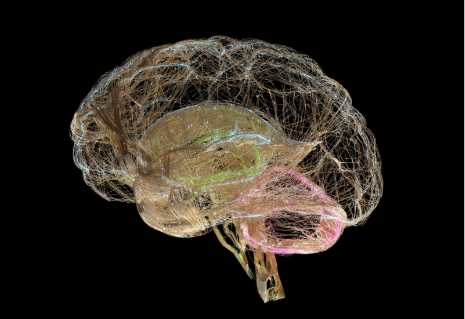
Dopamine is strongest during anticipation and not just consumption. This is why scrolling or checking notifications can feel so captivating. We are anticipating a reward regardless if we receive one. The brain is literally chasing the next possible reward, and it wants it instantly!
Our attention over time seems to become fragmented. Many of us cannot handle silence, and we must multitask, even to sleep!
Every scroll or swipe we complete, we are given incohesive content and text to scan and read. One study found that fragmented and incohesive reading affects attention and cognition. These researchers found that lower text dissimilarity (like reading a page of cohesive text instead of scrolling social media) reduced attention switching, improved working memory capacity, and lowered cognitive load (Cao et al., 2024).
So with this information and the way that the world seems to be moving towards short-form content everywhere, is there anything we can do about this?
Surprisingly, there are also studies that suggest that our attention is trainable (yes, even as adults we can still learn new tricks!). One study suggests that our attention can be strengthened in two main ways:

- Network training
This is repeatedly practicing specific tasks that engage attention systems (such as orienting and executive control). Activities like video games or computer-based exercises can improve certain aspects of attention, (though whether these transfer to other skills is debated).
- State training
This training is changing overall brain states through practices like exercise or meditation. Mindfulness meditation has been shown to enhance executive attention, reduce stress, and produce measurable brain changes (Posner et al., 2015).
So, how can therapy help?
Working with a mental health therapist can help reduce attention fragmentation by strengthening both cognitive skills and emotional regulation. As previously stated, attention is trainable! Therapy provides a structured space to rebuild sustained focus through monotasking, reflection, and gradually increasing attention stamina.
- Through therapy, clients learn how to slow down, tolerate silence, and engage more deeply with one task or thought at a time, and can learn executive functioning skills. These are skills such as impulse control, goal-setting, and follow-through.
- Many people use rapid scrolling as a way to avoid discomfort. Some therapists can help increase distress tolerance, reduce avoidance coping, and build emotional resilience so that uncomfortable feelings don’t automatically trigger distraction.
- Therapy can also address nervous system regulation. Chronic overstimulation can keep the body in a heightened state of arousal, making sustained attention difficult (Liu et al., 2020).
If you are interested in starting to work with a therapist on any of these issues, Through the Woods Psychology can help you find the right fit for you.
Visit our website to learn more or to book your free consultation today. You can also get in touch by email at info@throughthewoods.ca or phone at (403) 984-7922.
References:
Cao, J., Luo, J., Zhou, J., & Jiang, Y. (2024). Attention switching through text dissimilarity: A cognition research on fragmented reading behavior. Frontiers in Human Neuroscience, 18. https://doi.org/10.3389/fnhum.2024.1402746
Liu, Q., Liu, Y., Leng, X., Han, J., Xia, F., & Chen, H. (2020). Impact of chronic stress on attention control: Evidence from behavioral and event-related potential analyses. Neuroscience Bulletin, 36(11), 1395–1410. https://doi.org/10.1007/s12264-020-00549-9
Posner, M. I., Rothbart, M. K., & Tang, Y. Y. (2015). Enhancing attention through training. Current Opinion in Behavioral Sciences, 4, 1–5. https://doi.org/10.1016/j.cobeha.2014.12.008