Beyond the Silence: Why I Chose to Become a Counsellor
Written for Through the Woods Psychology by Anvir Dhatt, Counselling Intern
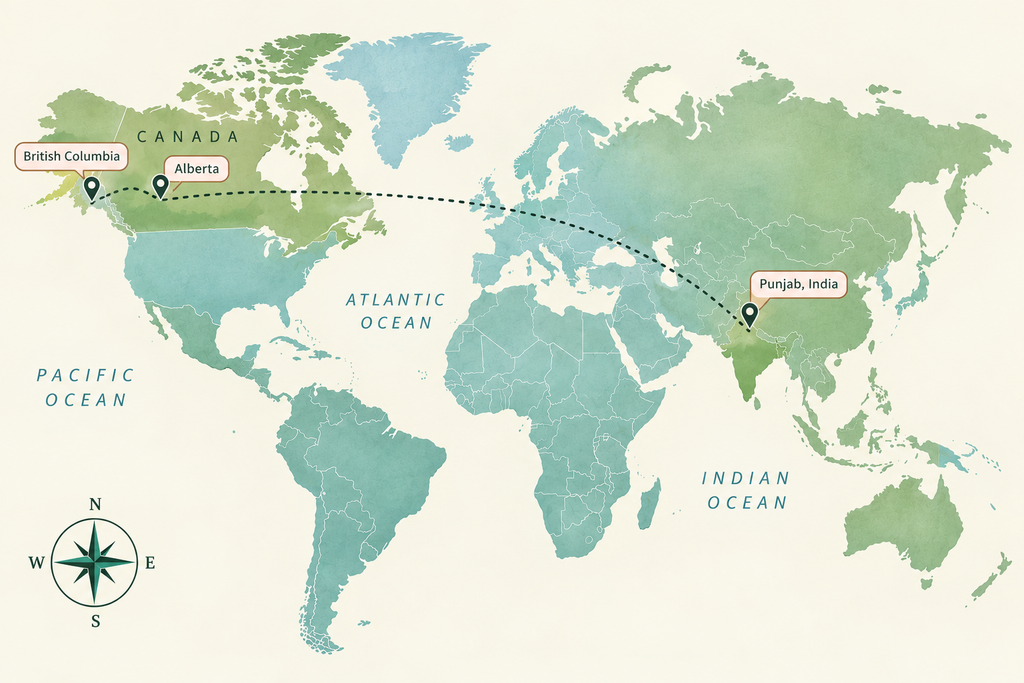
My parents were born and raised in Punjab, India, while I was born in Williams Lake, British Columbia, and grew up in Surrey. Being raised as a second-generation Punjabi Canadian meant growing up between two worlds, each with its own values, expectations, and ideas about what life should look like.
There are so many parts of my upbringing that I hold close to my heart. The importance of family, the sense of community, our traditions, and the way people showed up for one another shaped so much of who I am today. I grew up understanding the sacrifices my parents and generations before them had made, and with that came a deep appreciation for my culture and the opportunities I had been given.
But as I got older, I also began noticing things that were harder for me to understand.
One of those things was how little we seemed to talk about mental health.
In many of the South Asian households and community spaces I encountered, conversations about emotional struggles, relationship difficulties, or seeking professional support were often avoided. There seemed to be an unspoken understanding that certain things were better kept within the family, regardless of how difficult they might be.
I began noticing how much importance could be placed on perception, pride, and public image. What would people think? What would they say about our family? How would it look if someone found out?
Sometimes, it felt as though maintaining the appearance of a happy, successful family mattered more than acknowledging what was actually happening behind closed doors.
Of course, this does not reflect every Punjabi or South Asian family, and I have seen how much these conversations have evolved over time. But these were patterns I witnessed growing up, and they left me with questions I didn’t quite know how to answer.
Why was asking for help something to be ashamed of? Why did we sometimes care more about how things looked from the outside than how people were actually feeling?
I remember these questions becoming especially difficult when I began noticing the expectations surrounding marriage.
Marriage holds such an important place in Punjabi culture. It is often about more than two people building a life together; it brings families, traditions, responsibilities, and expectations together. There is something beautiful about that sense of connection, but I also began to see how those same expectations could become incredibly difficult to navigate.
Growing up, I became aware of marriages affected by infidelity, substance use, and, in some circumstances, domestic violence. What stayed with me wasn’t simply that these challenges existed, but how often it seemed that people felt they had no choice but to live with them.
The possibility of separation or divorce could carry so much judgment. Seeking counselling was not always seen as an option, and speaking openly about what was happening could feel like exposing the family to criticism or shame.
As a child, I remember feeling helpless. It sometimes seemed like I was watching similar situations unfold in different households, and I couldn’t understand why things had to stay that way.
I wondered why someone should have to sacrifice their happiness, emotional well-being, or even their safety to preserve a relationship. Why was staying together sometimes treated as more important than whether the people in that relationship were okay?
Looking back now, I recognize that I was seeing these situations through the eyes of a child. I didn’t understand the full complexity of people’s circumstances, the barriers they faced, or the reasons certain decisions may have felt impossible. But I knew that the silence surrounding these experiences bothered me, and that feeling stayed with me long after childhood.
From Curiosity to Counselling
As I grew older, those questions gradually turned into a genuine curiosity about people, relationships, and why we behave the way we do.
I wanted to understand why certain relationship patterns repeat themselves, how our childhood experiences influence the way we love and connect with others, and why it can be so difficult to leave behind something familiar, even when it causes us pain.
That curiosity eventually led me to the University of British Columbia, where I completed my undergraduate degree with a major in psychology and a minor in sociology.
I think the combination of those two fields reflected what I had been trying to understand for years. Psychology helped me explore our thoughts, emotions, behaviours, and relationships, while sociology encouraged me to look beyond the individual and consider the cultural and social expectations that shape our experiences.
The more I learned, the more I realized that understanding someone’s struggles often means understanding the world they grew up in, the relationships that shaped them, and the expectations they have carried with them.
Eventually, I decided to pursue my Master’s in Counselling Psychology at Yorkville University, which has now brought me to my internship at Through the Woods Psychology.
When I think about the kind of counsellor I hope to become, I often think about the people I wished had somewhere to turn when I was younger.
I think about how different someone’s experience might feel if they had a space where they could speak openly without worrying about being judged, misunderstood, or told what they should do.
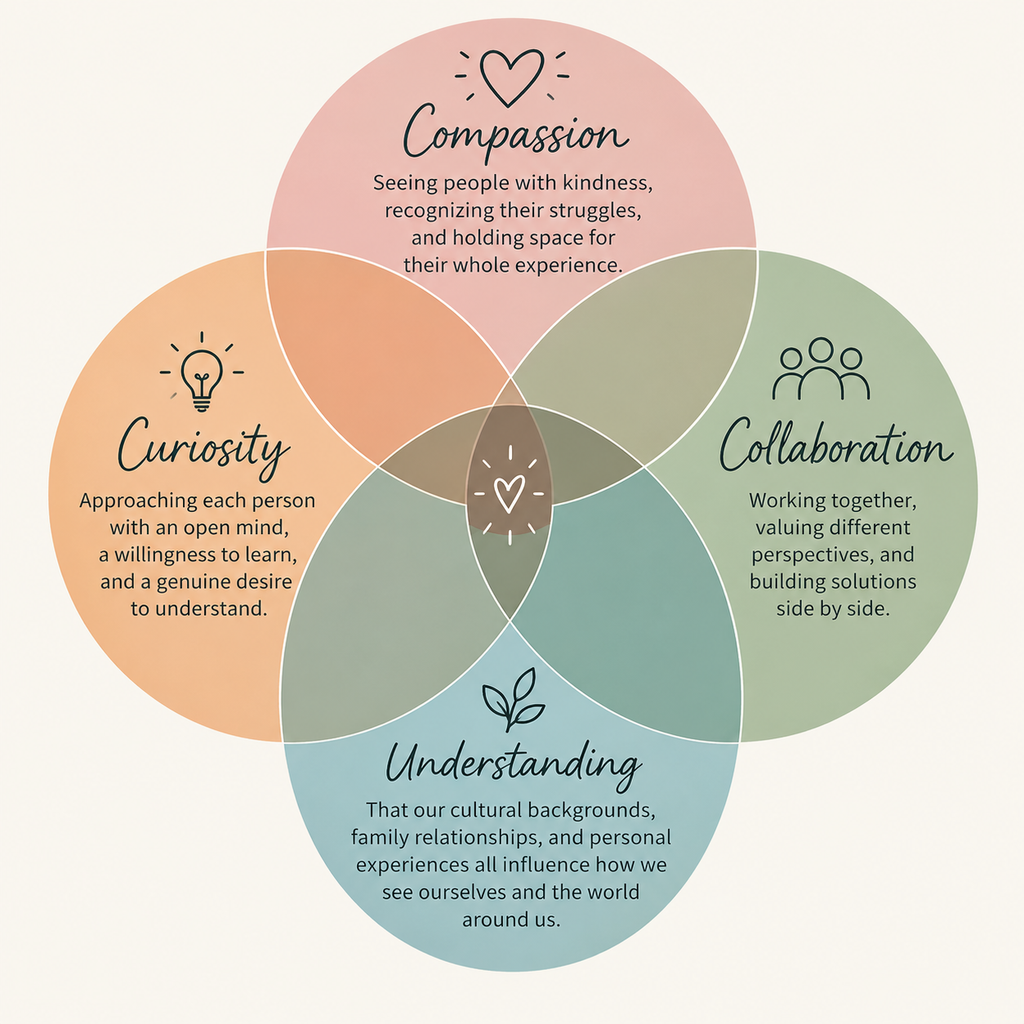
My upbringing has played a significant role in shaping how I hope to approach counselling. I value compassion, curiosity, collaboration, and an understanding that our cultural backgrounds, family relationships, and personal experiences all influence how we see ourselves and the world around us.
One area of counselling I feel particularly drawn to is working with couples and exploring the complexities of intimate relationships. I’m interested in how our earliest experiences of love, attachment, and connection influence the relationships we build as adults.
Why do we sometimes struggle to communicate what we really need? Why can conflict leave us feeling so disconnected from the people we love? And how do the expectations we grew up with influence what we believe a healthy relationship should look like?
These are questions that continue to interest me as I develop my approach to counselling.
I am particularly drawn to attachment theory, emotionally focused therapy (EFT), and the Gottman Method because of the ways they help us understand relationship patterns, emotional needs, and the importance of feeling safe, heard, and connected.
For me, relationship counselling is about more than helping couples communicate better or resolve disagreements. It is also about understanding what lies beneath those disagreements, recognizing the patterns that keep people feeling stuck, and exploring what each person needs to feel understood.
And sometimes, that exploration may involve recognizing that remaining in a relationship is not the healthiest or safest choice. I believe that respecting the importance of marriage, family, and cultural traditions should never mean overlooking someone’s autonomy, safety, or well-being.
Making Space for Conversations That Matter
When I reflect on why I chose this profession, I realize that so much of it comes back to the questions I had growing up.
I think about the silence surrounding mental health, the pressure to meet expectations, and the people who may have felt that their struggles were something they simply had to endure.
I also think about how difficult it can be to question beliefs and traditions that have been part of our families for generations, especially when those traditions are intertwined with love, belonging, and identity.
I don’t believe the answer is to reject where we come from. My culture is an important part of who I am, and there is so much about it that I deeply value. But I do believe we can honour our upbringing while also making room to question the expectations that may no longer serve us.
We can love our families and still have boundaries. We can value marriage without believing that every marriage must be preserved at any cost. And we can respect our culture while recognizing that seeking support for our mental health is not something to be ashamed of.
I know that changing deeply rooted beliefs and expectations is not simple, and I certainly don’t have all the answers. I’m still learning, both personally and professionally.
But I believe that sometimes change begins with something as simple as having a conversation that once felt impossible.
Ultimately, I chose to become a counsellor because I want to be part of creating that space. A space where people can explore their experiences without judgment, make sense of the relationships and expectations that have shaped them, and begin to consider what they want for themselves.
Perhaps what matters most to me is the idea that people should not have to choose between honouring where they come from and caring for their own emotional well-being.
Finding Support at Through the Woods Psychology
Navigating relationship difficulties, family expectations, cultural pressures, or challenges with your mental health can feel overwhelming, but you don’t have to face them alone.
At Through the Woods Psychology in Calgary, Alberta, we offer a supportive, compassionate space for individuals and couples to explore their experiences, deepen their understanding of themselves and their relationships, and work toward meaningful, lasting change.
If this resonates with you and you’re interested in exploring how therapy might help, I invite you to book a free initial consultation with me. As an intern, I have the opportunity to offer low cost therapy options.
To learn more about our services, visit Through the Woods Psychology, email info@throughthewoods.ca, or call (403) 984-7922.